 Akila Apart City
All three fit inside a rectangle two kilometres by one, either side of the Seine. You can walk everywhere. What separates them is therefore not distance from the monuments, it is the life you lead between two visits.
The table, if you are in a hurry
| Latin Quarter (5th) | Saint-Germain (6th) | Marais (3rd and 4th) | |
|---|---|---|---|
| Atmosphere | Student and scholarly, alive all year | Smart, quiet, bookshops and galleries | Fashionable, shops, very busy at weekends |
| In the evening | Lively without excess, mostly rue Mouffetard | Fairly quiet | Very lively, noisy in places |
| Accommodation budget | Middling | The highest of the three | High and rising |
| Everyday shopping | Easy, real local shops | Expensive | Patchy, mostly fashion |
| Good for | A first trip, a long stay, a family | A short, polished stay | A weekend, going out |
The Latin Quarter
This is the Left Bank around the Montagne Sainte-Geneviève: the Panthéon at the top, the Sorbonne below it, the Luxembourg Gardens to the west, the Seine to the north. The quarter takes its name from the Latin spoken at the medieval university, and it is still a place of study, with faculties, libraries, bookshops, art-house cinemas and cafés that open early.
What people like. It is lived in all year, not only in season. The food shops are neighbourhood shops rather than shopfronts. And almost all of central Paris is walkable: Notre-Dame in eight minutes, the Louvre in twenty-five, Saint-Germain in ten.
What grates. The Montagne Sainte-Geneviève is well named: it climbs. The buildings are old, so often without a lift. And the best-known streets, rue de la Huchette first among them, are heavily touristed, which is nothing like the rest of the quarter.
Who for. A first trip to Paris, a stay of more than four nights, a trip with teenagers. It is also the quarter where you sleep best without giving up centrality, because people still live in it.
Saint-Germain-des-Prés
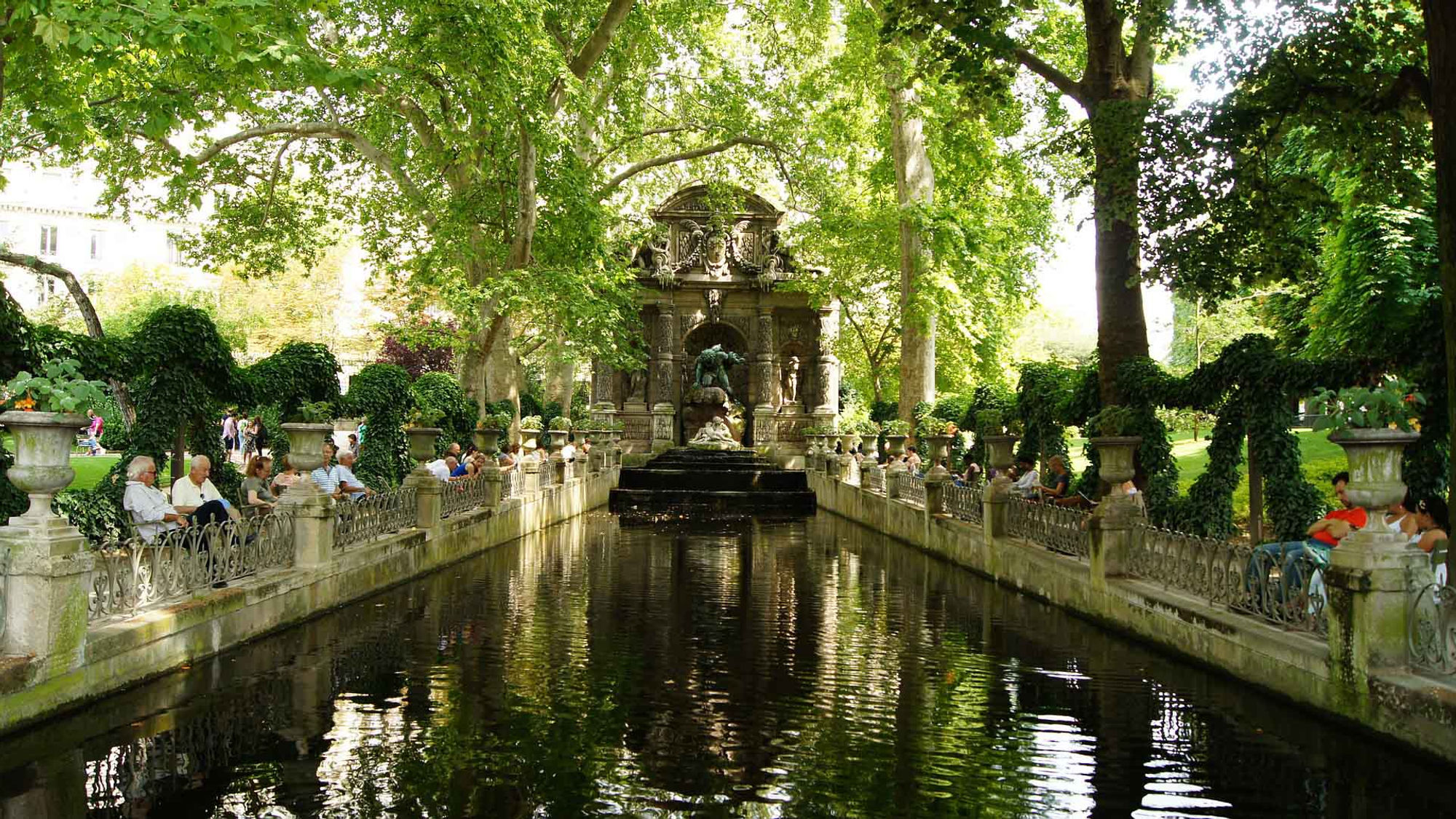
Just to the west, across boulevard Saint-Michel. Same bank, same closeness to the Seine, different bearing: wider streets in places, private mansions, art galleries, large bookshops, and the literary cafés that became institutions.
What people like. The quiet, the Luxembourg five minutes away, and an impression of classical Paris that matches exactly what you pictured.
What grates. The price. It is the most expensive of the three, in hotels as in rentals, and everyday shops have largely given way to luxury and fashion. For a stay where you cook, that is a handicap.
Who for. Two or three nights, a trip for two, a comfortable budget.
The Marais
Right Bank, between the Bastille and the Pompidou Centre. The quarter kept its medieval street plan, narrow lanes and seventeenth-century mansions, and has become in thirty years one of the liveliest parts of Paris.
What people like. The density: museums, shops, restaurants and bars within a few hundred metres. The place des Vosges. And real nightlife, which the Latin Quarter no longer really offers.
What grates. The crowds, especially on Saturday and Sunday, when some streets become hard to walk up. The noise on the going-out streets. And flats that are often small, in old buildings with narrow stairwells.
Who for. A weekend, a trip with friends, someone who goes out at night.
And if you looked slightly further
Those three are the most sought after and therefore the most expensive. Ten minutes away by métro, value for money changes sharply.
The lower 9th arrondissement, between the Opéra and Montmartre, is the clearest example: residential, with proper local shops, the department stores ten minutes away on foot, Montmartre in fifteen, and rates noticeably below the historic centre. The streets around rue de Bellefond, rue Lamartine and Notre-Dame-de-Lorette are its heart.
The general rule for Paris: beyond the ring road prices collapse but journey times explode. In between, the 9th, 10th, 11th and 14th arrondissements offer the best compromise.
Frequently asked questions
Which is the safest area to stay in Paris?
All three discussed here are central and busy, so present no particular difficulty. As anywhere in a large city, the real caution is pickpocketing on public transport and around the monuments.
Should I stay on the Left Bank or the Right Bank?
The Seine takes three minutes to cross on foot by any of a dozen central bridges. The bank matters far less than the distance to the nearest métro and how quiet the street is.
Is the Latin Quarter noisy at night?
Much less than its reputation. The very lively streets are concentrated around rue de la Huchette and the lower rue Mouffetard. A side street such as rue Valette is quiet after 10pm.
How many nights should I plan?
Three nights cover the major monuments. From five, an apartment becomes more comfortable than a hotel room, and cheaper if you eat in occasionally.