 Akila Apart City
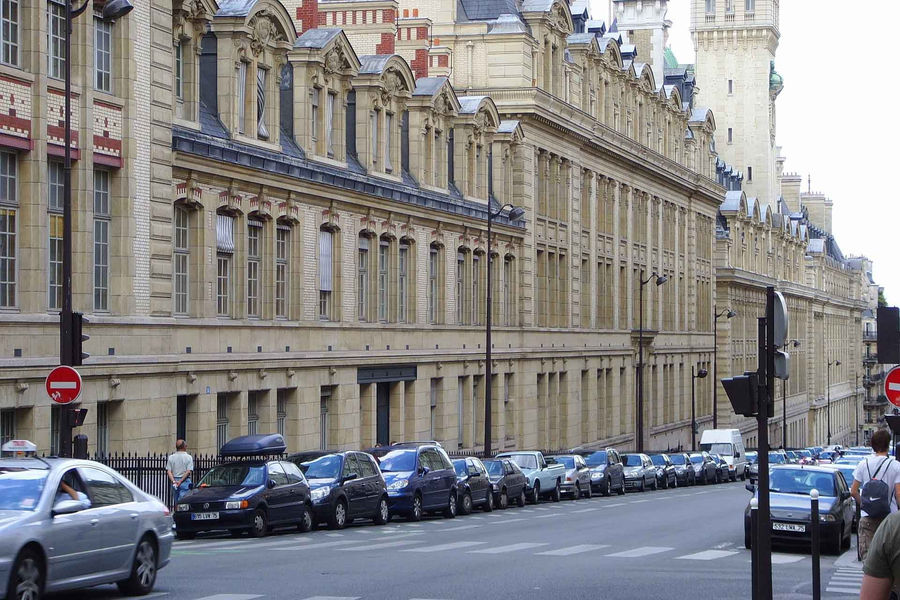
The quarter is quiet now. Walking up rue Gay-Lussac in spring it is hard to imagine that this street was, for one night, the centre of a rising that nearly brought down a government. Here is what happened, without the mythology.
How it got there
The French university of 1968 was not built for the number of students it held. Enrolment had tripled in ten years. Lecture halls overflowed, the rules dated from before the war, and at Nanterre, a new campus put up beside a shanty town, unrest began in March over very concrete grievances.
On 2 May Nanterre closed. On 3 May the students fell back on the Sorbonne. The rector called the police into the university courtyard, something unseen for centuries: the University had won in the Middle Ages the privilege of standing outside ordinary jurisdiction, and the custom outlived the privilege. The clearance and the arrests shocked far beyond the student body.
The Sorbonne closed. Demonstrations followed all week, each one denser.
The night of 10 to 11 May
On the evening of Friday 10 May a march of tens of thousands met police lines on the Left Bank. Unable to get through, it fell back into the quarter and settled there.
Around 9pm the first barricades went up on rue Le Goff, then rue Gay-Lussac, rue Saint-Jacques, rue d'Ulm, rue Claude-Bernard. Cobbles were prised out, cars overturned, trees felled. There would be some sixty of them. Residents lowered water and vinegar against the gas, and opened their doors to people being chased. Radio journalists commentated live all night, which was new.
The assault came around two in the morning and lasted until dawn. Hundreds injured on both sides, hundreds arrested, cars burned. By morning rue Gay-Lussac had not a cobble left.
On Monday 13 May the unions called a general strike. The country stopped for three weeks.
The cobbles, and what became of them
The cobblestone became the emblem of the month, to the point of producing the famous slogan about the beach underneath. The reality is more prosaic: under the cobbles is bedding sand, which is what makes them so easy to lift.
The City drew its conclusions. Over the following years many Latin Quarter streets were surfaced with asphalt, precisely so they could not be taken apart. That is why rue Gay-Lussac, the emblematic street of that night, is tarmacked today, while less exposed lanes kept their paving.
So when you walk on cobbles in the 5th, you are often in a street that played no part that night.
Reading the quarter today
There is no museum of May 1968, and almost no plaques. But the ground can be read.
- Rue Gay-Lussac, between the Luxembourg and rue Claude-Bernard: a narrow street on a slope, lined with tall buildings. A canyon. You immediately see why it was chosen and why it was hard to retake.
- Place de la Sorbonne, the starting point and rallying place of every march that month.
- Rue d'Ulm and the École normale supérieure, source of many of the texts and posters.
- The Odéon theatre, on the edge of the 6th, occupied from 15 May to 14 June and turned into a permanent open forum.
What it left
Politically the outcome was paradoxical: the June 1968 elections gave the government the largest majority in the history of the Fifth Republic. The movement was beaten on the ground where it thought it was winning.
But the French university was reformed that autumn, the Sorbonne was split into several universities, and a decade of social change followed. The quarter changed too: the dispersal of faculties to Jussieu, Censier and the suburbs gradually emptied the 5th of its students. Rents did the rest.
Today's Latin Quarter is a quarter of learning that has largely stopped being a quarter of students. That is one of the distant consequences of that spring, and the least often mentioned.
Frequently asked questions
When was the night of the barricades?
The night of Friday 10 to Saturday 11 May 1968, mainly on rue Gay-Lussac and the surrounding streets of the 5th arrondissement.
Why was the Sorbonne closed?
On 3 May 1968, after police entered the university courtyard at the rector's request, a first in centuries. The clearance set off a week of demonstrations.
Are there visible traces of May 1968 in the quarter?
Very few. Many streets were asphalted after 1968 to prevent cobbles being lifted. The relief and the proportions of the streets, however, are unchanged.
What did 'under the cobbles, the beach' mean?
A slogan of the month, playing on the bedding sand found under lifted paving stones. It became the most durable image of the period.